
Tips for Creating a Gallery Wall That Tells Your Personal Story
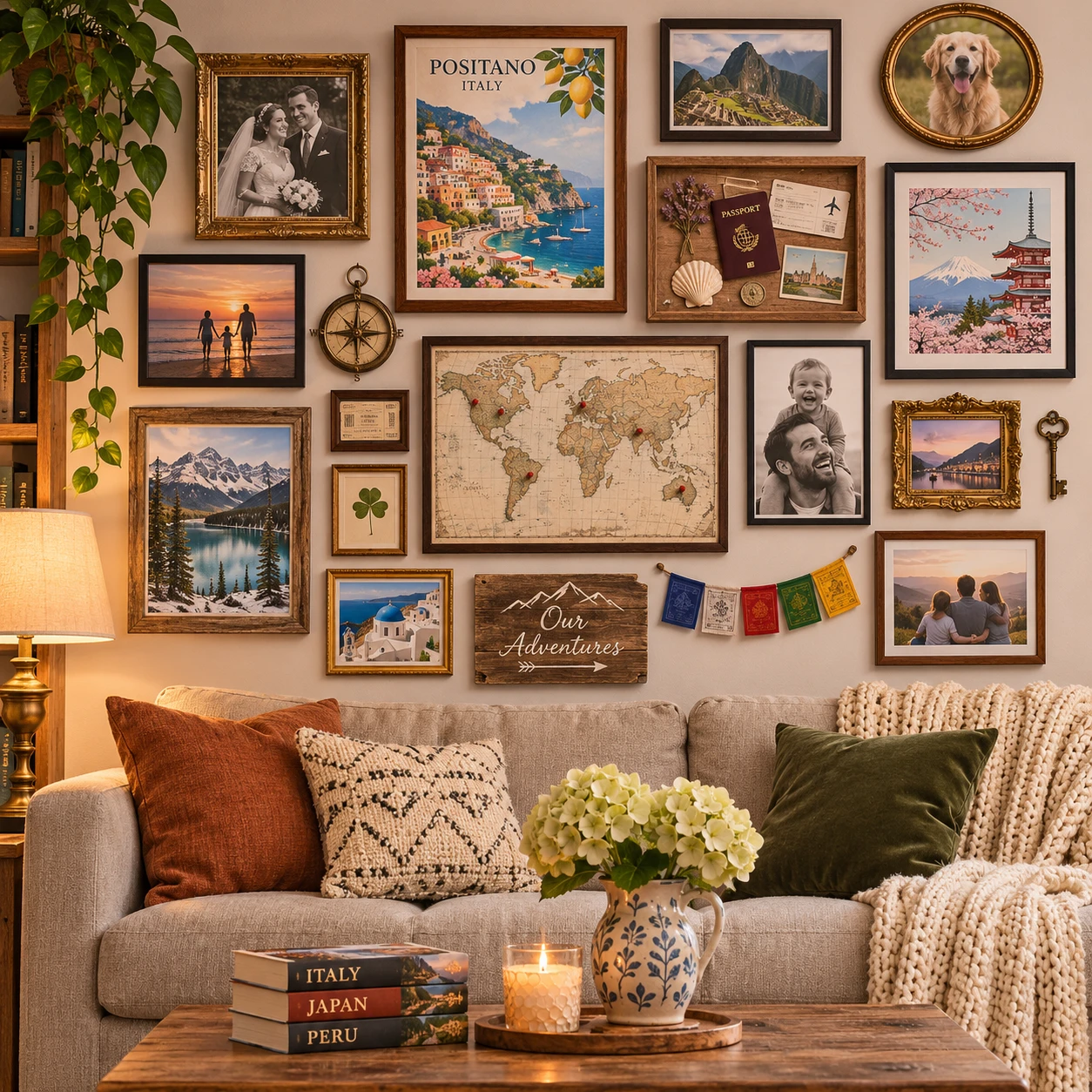
A gallery wall can hold more than pictures. It can bring together family photographs, favorite places, small keepsakes, and art that reflects who you are. With a little planning, you can create a display that feels collected and personal rather than overly matched or difficult to hang.
Start with the story, then consider color, scale, and spacing. You do not need expensive artwork or professional installation; a thoughtful mix and a few paper templates can make the process manageable.
Start with the story you want the wall to tell
Choose a gallery wall story by identifying the people, memories, places, or interests you want to see every day. That simple focus helps you select meaningful pieces without forcing every item into the same theme.
Think of the wall as a visual snapshot, not a complete biography. You might build it around a family’s changing generations, a favorite coastline, a creative hobby, or the places you have lived. Write down a few prompts before gathering anything: Which moments still make you smile? What do you want the room to feel like? Is there a person, place, or pastime you keep returning to?
A clear theme can still leave room for surprise. A wall about travel might include a personal photograph, a map, a sketch bought on a trip, and a ticket stub. The pieces do not need to match in subject or age; they need to feel connected to your life. If the story feels too broad, choose one anchor, such as a family, a region, or a decade, and build outward from it.
Gather art, photos, and meaningful objects
Gather a mix of personal photographs, art prints, and meaningful mementos, choosing pieces that matter to you and can be displayed safely. Varying their size and format gives the collection depth, while checking condition and weight helps prevent display problems.
Begin by collecting more options than you expect to use. Lay out family snapshots, travel photos, illustrations, postcards, children’s drawings, small textiles, or a framed note. Include one or two pieces with visual impact, such as a larger print or a photograph with a strong color, to give the eye a place to land.
Before framing, check each item for fading, tears, or brittle paper. Use copies for irreplaceable photographs, and keep delicate keepsakes away from direct sunlight and damp areas. Small objects can work in shadow boxes or sturdy display frames, but account for their depth and weight. A bulky souvenir may need a shelf beside the gallery wall rather than a frame. The aim is to preserve the memory while making the display practical.
For a more varied collection, combine different kinds of images: a candid photograph beside an art print, for example, or a handwritten recipe near a family portrait. Personal meaning gives the wall its character; varied scale keeps it from reading like a row of identical picture frames.
Find a visual thread to bring pieces together
A gallery wall feels cohesive when a few elements repeat, such as a color palette, subject, frame finish, or visual motif. Use one or two shared details to connect the collection, while letting the individual pieces keep their own character.
Look across the items you have collected and notice what is already there. Perhaps several photographs include warm greens, or your prints share a pale background. You can echo those colors in a mat, frame, or nearby object. A restrained palette can calm a busy collection, but too much coordination may make personal pieces feel like a store display.
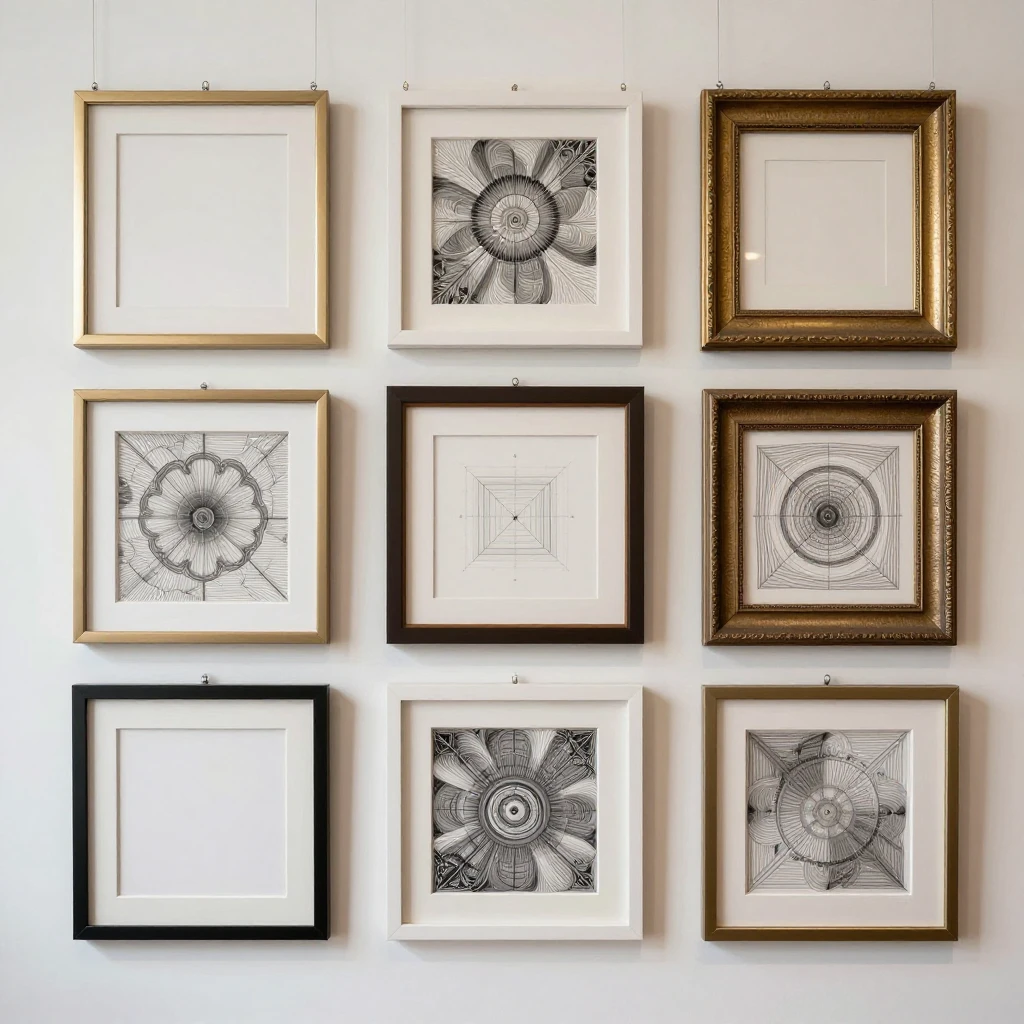
Frames offer another easy visual thread. You could use mostly black frames with one natural wood frame, or mix styles while repeating a similar frame width. Matching every frame is optional. If the art varies widely, consistent mats can provide order; if the images are similar, varied frames can add interest.
A repeated motif works, too: botanical subjects, handwritten words, architectural details, or a recurring shape. Keep the rule loose. One shared feature is often enough, and a small outlier can make the wall feel more like a collection gathered over time.
Choose a layout that suits your wall
Choose a gallery wall layout based on the available wall space, the size of your collection, and how formal you want the result to feel. A grid brings order, while a salon-style arrangement allows more variation in frame sizes and shapes.
A **grid layout** suits pieces with similar dimensions and can feel calm above a desk or along a narrow wall. It needs consistent spacing and careful alignment, so it is less forgiving when frames vary greatly. A **salon-style layout** mixes sizes around a central area and works well for an evolving collection. Its relaxed appearance still benefits from a clear outer boundary or a shared visual thread.
Other arrangements can suit particular spaces:
- Linear layout: A row of frames works along a hallway or above a bench. Align the centers or top edges for a clean line.
- Asymmetrical cluster: A larger focal point paired with smaller pieces can fit an informal living room wall.
- Picture ledge: Leaning frames on a shelf makes it simple to rotate photos and prints, though the ledge takes up more depth.
Measure the furniture and wall before settling on a shape. A composition should relate to what sits beneath it, not float as a tiny island. When in doubt, plan the full arrangement on paper or with templates before deciding whether it belongs over a sofa, bed, console, or staircase.
Test the arrangement before hanging
Test a gallery wall arrangement with paper templates or a floor layout before making holes. This lets you adjust balance, spacing, and the focal point while the pieces are still easy to move.
Trace each frame onto kraft paper, newspaper, or scrap paper, then label the template with the piece’s name and orientation. Cut out the shapes and use painter’s tape to place them on the wall. Step back from the doorway and from the main seat in the room; a layout that looks balanced up close can feel lopsided from across the space.
Alternatively, arrange the frames on the floor in roughly the same footprint as the wall. Start with the largest or most important piece, your focal point, and position smaller pieces around it. The focal point might be a wedding photograph, a striking art print, or a memento in a shadow box. Keep visual weight balanced: several dark frames on one side may need a larger or darker piece opposite.
Choose a spacing range and apply it consistently. Around two to three inches between frames is a useful starting point, though tighter spacing can suit a compact grid and wider gaps can make a sparse display feel intentional. Measure the gaps between frame edges, not between hooks. Adjust the templates until the whole arrangement feels balanced, rather than perfecting each individual gap in isolation.
Hang the gallery wall and make it yours
Hang a gallery wall by transferring the tested template positions to the wall, choosing hardware suited to each frame’s weight and wall type. Leave the arrangement flexible so you can add, replace, or rearrange pieces as your story changes.
First, locate studs where possible and check for hidden wiring or pipes before drilling. Select hanging hardware based on the frame weight and wall material; a small lightweight frame and a heavy mirror do not call for the same fastener. Follow the hardware maker’s instructions, especially for drywall anchors, and use a level to keep frames straight. For valuable or unusually heavy objects, get suitable installation advice rather than relying on a generic picture hook.
Use each paper template to mark the hanging point, taking into account where the frame’s wire, D-ring, or sawtooth hanger sits. Remove the template, install the fastener, and hang the frame. Work from the focal point outward, checking the overall arrangement every few pieces. This keeps small shifts from accumulating into a noticeably uneven edge.
Think of the finished wall as editable. Keep a little space for a future photograph or artwork, and use a picture ledge if you like changing the display often. The trade-off is that a ledge needs room and can look cluttered if every surface is filled. For framed pieces that stay on the wall, a simple inventory or a photo of the arrangement can help you restore it after repainting or rearranging furniture.
Most of all, let the wall change with you. A new family photo, a print from a recent trip, or a child’s drawing can take the place of an older piece. Its value comes from the memories it holds, not from keeping a fixed design untouched.
Frequently asked questions
How do I make a gallery wall look cohesive with different frames?
Repeat one or two elements, such as a frame color, mat style, or palette, while varying the rest. Different frames can look cohesive when their scale and spacing feel considered.
What should I include in a personal gallery wall?
Include items that connect to your memories or interests: personal photographs, art prints, postcards, children’s drawings, maps, or safely framed mementos. Mix personal pieces with artwork to give the display both meaning and visual variety.
How do I plan a gallery wall before putting holes in the wall?
Trace each frame onto paper, cut out the templates, and tape them to the wall. Rearrange the shapes until the composition and focal point feel right, then mark the hanging positions through the templates.
How much space should I leave between frames?
Start with about two to three inches between frame edges, then adjust for the wall and collection. Consistent spacing matters more than following one exact measurement.